Put your bike in one of these.
plan b
scare drivers to death
crush protection
make yourself conspicuous
I think being meek and out of the way is just one step towards being ignored and
then killed. So, get in their faces. Hogg a lane. They won't forget you then.
However, the may then have other reasons to kill you.
Sunday, 19 August 2012
Saturday, 30 June 2012
a major rethink of human culture
I'm not a big fan of philosophising, prefering to think and act,
and think again.
However, Chris Hedges gives me a lot to think about,
and allows thinkers to think outside the gilded cage
that has been set up around our political leaders.
Some ideas:
- Indians in America were killed as much for their
IshitUnot: Truthdig
and think again.
However, Chris Hedges gives me a lot to think about,
and allows thinkers to think outside the gilded cage
that has been set up around our political leaders.
Some ideas:
- Indians in America were killed as much for their
egalitarian political economics of subsistence
as they were for the land they were sitting on.IshitUnot: Truthdig
By Chris Hedges
Hedges: How Our Demented Capitalist System Made America Insane
When
civilizations start to die they go insane. Let the ice sheets in the Arctic
melt. Let the temperatures rise. Let the air, soil and water be poisoned. Let
the forests die. Let the seas be emptied of life. Let one useless war after
another be waged. Let the masses be thrust into extreme poverty and left
without jobs while the elites, drunk on hedonism, accumulate vast fortunes
through exploitation, speculation, fraud and theft. Reality, at the end, gets
unplugged. We live in an age when news consists of Snooki’s pregnancy, Hulk Hogan’s sex tape and Kim Kardashian’s denial
that she is the naked woman cooking eggs in a photo circulating on the
Internet. Politicians, including presidents,
appear on late night comedy shows to do gags and they campaign on issues such
as creating a moon colony. “At times when the page is turning,”
Louis-Ferdinand Celine wrote in “Castle to Castle,” “when History brings all
the nuts together, opens its Epic Dance Halls! hats and heads in the whirlwind!
Panties overboard!”
The
quest by a bankrupt elite
in the final days of empire to accumulate greater and greater wealth, as Karl
Marx observed, is modern society’s version of primitive fetishism. This
quest, as there is less and less to exploit, leads to mounting repression,
increased human suffering, a collapse of infrastructure and, finally, collective
death. It is the self-deluded, those on Wall Street or among the political
elite, those who entertain and inform us, those who lack the capacity to
question the lusts that will ensure our self-annihilation, who are held up as
exemplars of intelligence, success and progress. The World Health Organization
calculates that one in four people in
the United States suffers from chronic anxiety, a mood disorder or depression—which
seems to me to be a normal reaction to our march toward collective suicide. Welcome
to the asylum.
... The war on the Native Americans, like the wars waged by
colonialists around the globe, was waged to eradicate not only a people but a
competing ethic. The older form of human community was antithetical and
hostile to capitalism, the primacy of the technological state and the demands
of empire. This struggle between belief systems was not lost on Marx. “The
Ethnological Notebooks of Karl Marx” is a series of observations derived from
Marx’s reading of works by historians and anthropologists. He took notes about
the traditions, practices,
social structure, economic systems and beliefs of numerous indigenous cultures
targeted for destruction. Marx noted arcane details about the formation of
Native American society, but also that “lands [were] owned by the tribes in
common, while tenement-houses [were] owned jointly by their occupants.” He
wrote of the Aztecs, “Commune tenure of lands; Life in large households
composed of a number of related families.” He went on, “… reasons for believing
they practiced communism in living in the household.” Native Americans,
especially the Iroquois, provided the governing model for the union of the
American colonies, and also proved vital to Marx and Engel’s vision of
communism.
Marx,
though he placed a naive faith in the power of the state to create his workers’
utopia and discounted important social and cultural forces outside of
economics, was acutely aware that something essential to human dignity and independence had been lost
with the destruction of pre-modern societies. The Iroquois Council of
the Gens, where Indians came together to be heard as ancient Athenians did,
was, Marx noted, a “democratic assembly where every adult male and female
member had a voice upon all questions brought before it.” Marx lauded the
active participation of women in tribal affairs, writing, “The women [were]
allowed to express their wishes and opinions through an orator of their own
election. Decision given by the Council. Unanimity was a fundamental law of its
action among the Iroquois.” European women on the Continent and in the colonies
had no equivalent power.
Rebuilding
this older vision of community, one based on cooperation rather than
exploitation, will be as important to our survival as changing our patterns of
consumption, growing food locally and ending our dependence on fossil fuels.
The pre-modern societies of Sitting Bull and Crazy Horse—although they were not
always idyllic and performed acts of cruelty including the mutilation, torture
and execution of captives—did not subordinate the sacred to the technical. The
deities they worshipped were not outside of or separate from nature.
... The demented project of
endless capitalist expansion, profligate consumption, senseless exploitation
and industrial growth is now imploding. Corporate hustlers are as blind to the
ramifications of their self-destructive fury as were Custer, the gold
speculators and the railroad magnates. They seized Indian land, killed off its
inhabitants, slaughtered the buffalo herds and cut down the forests. Their
heirs wage war throughout the Middle East,
pollute the seas and water systems, foul the air and soil and gamble with
commodities as half the globe sinks into abject poverty and misery. The Book of Revelation defines this
single-minded drive for profit as handing over authority to the “beast.”
... The Native Americans
understood there are powers and forces we can never control and must honor.
They knew, as did the ancient Greeks, that hubris is the deadliest curse of the
human race. This is a lesson that we will probably have to learn for ourselves
at the cost of tremendous suffering.
... “Ethnological Notebooks,”
Morgan’s insistence on the historical and social importance of “imagination,
that great faculty so largely contributing to the elevation of mankind.” Imagination, as the Shakespearean scholar
Harold C. Goddard pointed out, “is neither the language of nature nor the
language of man, but both at once, the medium of communion between the two.
... Imagination is the elemental speech in all senses, the first and the last,
of primitive man and of the poets.”
Monday, 4 June 2012
short-sighted architectural waste
Why is it that humans waste the most resources building houses or factories,
and then when they're done, they just leave a shell there? I think it's horrible.
There are homeless people and lots of empty buildings.
Homeless? meet your new home. Or just squat [did a story on that, once]
Now there are entire streets in neighbourhoods that are empty because of the
mortgage debacle in the US. The banks keep foreclosing, illegally, and then
they can't take care of the houses, or sell them. What a waste of resources,
not just money.
This is like a story in Spiegel about ghost towns, that came to be because
industry moved on.
http://www.spiegel.de/international/zeitgeist/berlin-exhibition-explores-modern-ghost-towns-a-835282.html
Japanese coal island of Hashima [may be needed again, since nukes switched off]
Varosha, Norther Cyprus. victim of war
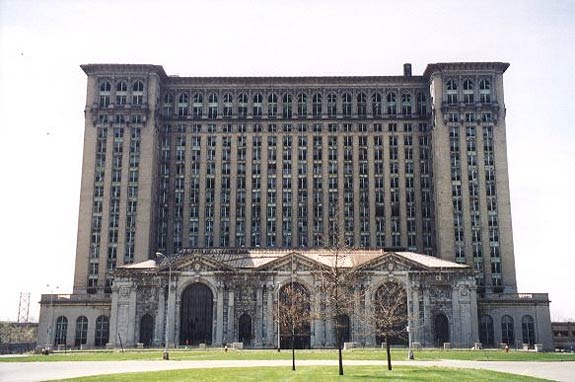
see also: Detroit train station
What a grand beast of a building.
see also
Foreclosure Ghost Towns Likely?
By: Kirk Haverkamp
January 07, 2011
Although many housing markets are expected to fully recover from the impacts of the economic downturn within a decade, others may remain mired in decline for years to come, perhaps even coming to resemble Old West ghost towns.
That’s among the conclusions of a new study from the Mortgage Bankers Association, looking at the long-term impact of what it terms the “Great Recession” on metropolitan areas that are in the midst of a severe decline due to job losses and a shrinking population.
In addition to industrial cities like Detroit, which fell on hard times due to declines in the auto and steel industry, the report identifies a new type of declining city that experienced strong growth during the housing boom and now is seeing unprecedented declines in housing values and rising foreclosures, such as the Las Vegas, Phoenix and Miami markets.
"The future viability of these areas may be threatened by recent economic events," said Jame Follain, a senior fellow at the Rockefeller Institute and the report’s author. "This is a critical point that should be well understood by potential home buyers and lenders who want to avoid places plagued by high foreclosures, vacancies and a deteriorating housing stock due to deferred maintenance.” [why not try RITUAL BURNING of "underwater" or substandard houses, just to KEEP WARM- Cosine67]
The report suggests that choosing the right neighborhood will be critical for homebuyers in the years ahead, especially in metropolitan areas that were hard-hit by the recession, as neighborhoods with elevated vacancies and foreclosures are expected to continue to struggle for an extended time to come. Even previously stable neighborhoods or communities within such regions could find their viability threatened, according to report.
Indeed, even in metropolitan areas where economic prospects are relatively good, some neighborhoods or submarkets may remain in decline for an extended period to come, the report says.
The basic problem, according to the report, is that people tend to leave an area as jobs decline, creating more vacant housing stock, which drives down property values, further weakening the local economy. The problem is likely to be particularly acute in regions where a growing housing market was a big driver of the economy prior to the recession, such as parts of Nevada, Arizona, Florida and California.
The report compares the situation to that of Old West ghost towns, communities that lost their reason for existing, and so the people went away, leaving empty buildings behind, although it says modern communities are not likely to reach so extreme a stage.
Indeed, the foreclosure and vacant housing stock has gotten so severe that some are urging that surplus and decaying housing stock and commercial buildings be demolished to boost surrounding property values and open up green space. A public-private venture, Red Fields to Green Fields, is already seeking to do that in 12 U.S. cities, examining how unused or underutilized property could be acquired by parks agencies or public-private partnerships for demolition and conversion to parkland or to be held in land banks until the economy recovers.
and then when they're done, they just leave a shell there? I think it's horrible.
There are homeless people and lots of empty buildings.
Homeless? meet your new home. Or just squat [did a story on that, once]
Now there are entire streets in neighbourhoods that are empty because of the
mortgage debacle in the US. The banks keep foreclosing, illegally, and then
they can't take care of the houses, or sell them. What a waste of resources,
not just money.
This is like a story in Spiegel about ghost towns, that came to be because
industry moved on.
http://www.spiegel.de/international/zeitgeist/berlin-exhibition-explores-modern-ghost-towns-a-835282.html
Japanese coal island of Hashima [may be needed again, since nukes switched off]
Varosha, Norther Cyprus. victim of war
see also: Detroit train station
What a grand beast of a building.
see also
Foreclosure Ghost Towns Likely?
By: Kirk Haverkamp
January 07, 2011
Although many housing markets are expected to fully recover from the impacts of the economic downturn within a decade, others may remain mired in decline for years to come, perhaps even coming to resemble Old West ghost towns.
That’s among the conclusions of a new study from the Mortgage Bankers Association, looking at the long-term impact of what it terms the “Great Recession” on metropolitan areas that are in the midst of a severe decline due to job losses and a shrinking population.
In addition to industrial cities like Detroit, which fell on hard times due to declines in the auto and steel industry, the report identifies a new type of declining city that experienced strong growth during the housing boom and now is seeing unprecedented declines in housing values and rising foreclosures, such as the Las Vegas, Phoenix and Miami markets.
"The future viability of these areas may be threatened by recent economic events," said Jame Follain, a senior fellow at the Rockefeller Institute and the report’s author. "This is a critical point that should be well understood by potential home buyers and lenders who want to avoid places plagued by high foreclosures, vacancies and a deteriorating housing stock due to deferred maintenance.” [why not try RITUAL BURNING of "underwater" or substandard houses, just to KEEP WARM- Cosine67]
The report suggests that choosing the right neighborhood will be critical for homebuyers in the years ahead, especially in metropolitan areas that were hard-hit by the recession, as neighborhoods with elevated vacancies and foreclosures are expected to continue to struggle for an extended time to come. Even previously stable neighborhoods or communities within such regions could find their viability threatened, according to report.
Indeed, even in metropolitan areas where economic prospects are relatively good, some neighborhoods or submarkets may remain in decline for an extended period to come, the report says.
The basic problem, according to the report, is that people tend to leave an area as jobs decline, creating more vacant housing stock, which drives down property values, further weakening the local economy. The problem is likely to be particularly acute in regions where a growing housing market was a big driver of the economy prior to the recession, such as parts of Nevada, Arizona, Florida and California.
The report compares the situation to that of Old West ghost towns, communities that lost their reason for existing, and so the people went away, leaving empty buildings behind, although it says modern communities are not likely to reach so extreme a stage.
Indeed, the foreclosure and vacant housing stock has gotten so severe that some are urging that surplus and decaying housing stock and commercial buildings be demolished to boost surrounding property values and open up green space. A public-private venture, Red Fields to Green Fields, is already seeking to do that in 12 U.S. cities, examining how unused or underutilized property could be acquired by parks agencies or public-private partnerships for demolition and conversion to parkland or to be held in land banks until the economy recovers.
Monday, 23 April 2012
chemlab menu is saving our health
I'm quite proud that my campaign (look at the twitter thing, on the right)
about testifying to the sh*t that factories call "food" has perhaps
helped, every so little, in the return to real food.
IshitUnot: Guardian
Nestlé removes artificial ingredients from entire confectionary range
Firm claims it is first major confectioner in UK to remove all artificial preservatives, flavours and colours from its products
Caroline Davies
* The Guardian, Friday 2 March 2012
Nestlé, manufacturer of KitKat, Aero and Smarties, has removed artificial colours, flavours and preservatives from its entire confectionery range. Nestlé Crunch is the last of 79 products to become free of artificial ingredients since the company began to replace more than 80 additives with alternatives six years ago, it said.
The company, which was responding to consumer demand, says it is the first big UK confectioner to remove all artificial products. Concentrates of fruit, vegetables and edible plants such as carrot, hibiscus, radish, safflower and lemon are among ingredients used to provide colour. David Rennie, managing director of Nestlé Confectionery UK, described the move as a significant milestone.
"Nestlé is proud to be the only major confectionery company in the UK to announce it is 100% free of artificial preservatives, flavours or colours across its entire portfolio," said Rennie.
about testifying to the sh*t that factories call "food" has perhaps
helped, every so little, in the return to real food.
IshitUnot: Guardian
Nestlé removes artificial ingredients from entire confectionary range
Firm claims it is first major confectioner in UK to remove all artificial preservatives, flavours and colours from its products
Caroline Davies
* The Guardian, Friday 2 March 2012
Nestlé, manufacturer of KitKat, Aero and Smarties, has removed artificial colours, flavours and preservatives from its entire confectionery range. Nestlé Crunch is the last of 79 products to become free of artificial ingredients since the company began to replace more than 80 additives with alternatives six years ago, it said.
The company, which was responding to consumer demand, says it is the first big UK confectioner to remove all artificial products. Concentrates of fruit, vegetables and edible plants such as carrot, hibiscus, radish, safflower and lemon are among ingredients used to provide colour. David Rennie, managing director of Nestlé Confectionery UK, described the move as a significant milestone.
"Nestlé is proud to be the only major confectionery company in the UK to announce it is 100% free of artificial preservatives, flavours or colours across its entire portfolio," said Rennie.
Wednesday, 21 March 2012
American Tent City

In-tents-city in Ten Cities


This is a story about how people have been coping with the stress
of modern life when the money dries up. Do you end it all,
or beg, or work as a slave, stacking shelves?
Or do you see this as an opportunity to take yourself off
the hamster wheel that the Man has you on?
Here's a community with its own society, rules and
social support, in the middle of a desert.
IshitUnot: Yahoo
Slab City: Living Off the Grid in California's Badlands
By JASON MOTLAGH / SLAB CITY | Time.com – Fri, Feb 3, 2012
chicago" Joe Angio and his wife Anna did everything by the book to secure their slice of the American Dream. They earned college degrees, started a small business, bought a house and pair of cars, paid their taxes and credit-card bills on time. But when the economy tanked, so did the dream. Between two jobs they could barely pay their mortgage, reaching a point where they had to choose which creditor to shortchange at the end of the month in order to keep the lights on. With foreclosure no longer a matter of if, but of when, the couple looked on the Internet for the ideal place to lay low, spend less and experiment with solar power to "get more for our buck out of our environment." They bought a used RV and went off the grid. Way off.
Slab City, their home for the past three months, is a squatters' camp deep in the badlands of California's poorest county, where the road ends and the sun reigns, about 190 miles southeast of Los Angeles and hour's drive from the Mexican border. The vast state-owned property gets its name from the concrete slabs spread out across the desert floor, the last remnants of a World War II–era military base. In the decades since it was decommissioned, dropouts and fugitives of all stripes have swelled its winter population to close to a thousand, though no one's really counting. These days, their numbers are growing thanks to a modest influx of recession refugees like the Angios, attracted by do-it-yourself, rent-free living beyond the reach of electricity, running water and the law. And while the complexion of the Slabs, as the place is locally known, may be changing in some ways, the same old rule applies: respect your neighbor, or stay the hell away.
"It's pretty much as close to the Old West as you're gonna get. Most of us don't own guns or none of that garbage, but if we have problems, we take care of [them]," says Ray, 56, a former drug addict turned born-again Christian who has traversed the country six times with a giant wooden cross on his back. Katie Ray, 30, a perennial visitor from Oakland, Calif., calls the place a "postapocalyptic vacation zone." (PHOTOS: After Foreclosure: A Photographer's Requiem for the American Home)
Although Slabbers tend to defy easy characterization, de facto neighborhoods ("Poverty Flats," "Lows") and tribes have emerged. There are Year-Rounders who brave the 120°F summer inferno, and Snowbirds who land from as far as Canada with their souped-up RVs and pensions, soul-searching Gypsy Kids who arrive by train with little more than the ragged clothes on their back, Spaz Kids and their electro-psychedelic outdoor parties, and Scrappers who risk life and limb to collect shrapnel from the gunnery range that flanks the camp, where Navy SEAL teams train year-round (and where rumor has it they prepared for the Osama bin Laden raid). That's to say nothing of the rowdy bikers who pass through, or the meth-addled loners on the outer edges inclined to greet a trespasser with a gunshot. If the Burning Man festival were a permanent settlement instead of a weeklong escape -- remixed with a hard dose of reality -- this might be it.
"The Last Free Place in America" lives up to its nickname. Want to hang out nude in thermal mud baths or skateboard stoned in the bowl of an Olympic-size pool? Go for it. In the mood to construct outlandish pieces of art with scrap metal, dig an SUV-size trench for no particular reason or play 18 holes of golf on a grassless course to the sound of bombs in the distance? This is the place. Yet despite the anything-goes reputation, those who stick around the Slabs long enough insist they are made to feel welcome, provided they have the right attitude. Free meals and entertainment are on offer, capped by Saturday-night concerts at the Range, a clapboard venue that showcases live acts of varying quality. This bohemian aspect was featured in the 2007 film Into the Wild, rare mainstream attention that drew a surge of newcomers to Slab City.
One of them is Sandra "Sandi" Andrews, 61, a nomadic mother of eight without a retirement plan. Her daughter saw the film and figured it was her mom's kind of place. She was right. "When I first got here, I thought this is a whole new planet, there's no place like it," she exclaims. Initial concerns about her safety as a woman alone did not last long. Three years on, she's surrounded by friends and lives on less than $100 a month, supplementing her Social Security check with paintings she sells to tourists that stop by her studio, a converted school bus. Among her neighbors are two widows in their 90s and an 89-year-old who jokes that she'd die as soon as she set foot in a retirement home. "We've all chosen and like Slab City," Andrews says, "so the caring and sharing is always there." (MORE: The Tale of a Lost Mortgage)
Well, it depends on whom you ask too. "Builder Bill" Ammon, 63, a year-round resident who manages the Range, says that when he moved from San Diego to the Slabs back in 1999, the community was more tight-knit. "In those days, you could be poor and be separate from the engine of the world and still be all right," he says, fondly recalling how most everyone talked to one another on their CB radios and exchanged services and goods at regular swap meets to support themselves. "People had skills to offer." These days, he grumbles, a new generation of youngsters is turning up ill equipped for the sobering demands of life off the grid, looking for handouts. No one is left to go hungry, he notes. But if they don't adapt, they are given the cold shoulder, which may help explain the rise in petty theft at the camp. "A kind of segregation has developed here" between young and old, he says.
No one would disagree that the Wild West element has its darker side. Hang around the evening campfires a while and strange stories pour out: disappearances, mysterious drownings in the mud baths, the man who showed up in camp with his finger apparently bitten off, claiming he'd been attacked by a cannibal. The border patrol keeps a visible presence, searching for illegal immigrants that ply the region. When there's serious trouble, though, firemen must drive over from Niland, a derelict town five miles to the west that boasts the closest grocery store and post office. In 40-plus years on the job, Michael Aleksick, 63, the recently retired fire marshal, says he's been repeatedly shot at, stabbed and gotten in too many fistfights to remember, often with people he knows. Crime has worsened. "The crystal-meth influence," he says, "has been huge."
"There's the good, bad and the ugly," says "Shotgun" Vince Neill, 38, a newcomer who got his nickname partly for stopping a man from stealing a friend's solar panels with a blast of rock salt. He first visited the Slabs as a boy and returned this winter with his wife and six children in tow after he lost his audiovisual business and their home in Northern California. Sometimes he worries about his family's safety, but Neill reckons that Slab City's problems are proportionate to any normal city in the country. And he has no regrets about bringing his kids (ages 2 to 18). In this case, math and English lessons are rounded out with training on catching scorpions and rattlesnakes. "They're much happier learning in the great outdoors; it's the best school," he says. Still, Slab City is more of a parking spot than a long-term solution: come summer, the family will head to Los Angeles so he can look for full-time work. (VIDEO: The New Poor of Fresno)
Others, like "Radio" Mike Depraida, 60, keep choosing to return. The native New Yorker was living the fast life as a consultant and photographer but grew weary of the hectic pace and an apartment building where he didn't know his neighbors. A chance visit with friends three years ago got him hooked on the Slabs, and he's since become the perpetually tan guy in a polo shirt who operates a radio station and greets travelers with a gin and tonic at his makeshift tiki bar. The freedom and mix of people keep him coming back, a dearth of single women notwithstanding. "Why are these some of the most intelligent people I've met in my life?" he asks aloud. "I came to the conclusion that if you're smart enough to get out of the rat race, well, then, you're pretty damn bright."
Chicago Joe and Anna are proof positive. They ended up parking their trailer in East Jesus, a renegade open-air art space with Mad Max accents. The view outside their window features a half-buried coach bus and, beyond that, a giant mammoth made of tires; their neighbors include an ex-chef, a documentary filmmaker and a wandering magician cum tattoo artist. What started as an adventure has settled into a routine filled with solar projects and other odd jobs that will keep them busy and fit. Joe's already lost 80 lb. "People back home still think we're crazy for doing what we've done," he says. "It's not for everyone, but this lifestyle has grown on us, tremendously." The couple swear their relationship has also improved because they no longer fight about money. It's not hard to understand why: their living expenses have dropped from about $4,000 to $200 a month. Less than their electricity bill when they owned a house.
Now I know why I cut out the processed cereal
Tweet from MMFlint Michael Moore
RT @imajoebob You are aware that Corn Flakes
were created 2 reduce one's sex drive?
I shudder thinking what was behind Fruit Loops.#Mich175
This stuff is so interesting from a historical perspective.
It was the point when science was colliding with manufacturing
to produce new foods. The point being that Kellogg, and I
think there was a movie or documentary on him, was using
processed food as part of a philosophy of how modern
people should be. But because we're talking about food,
it starts to get creepy. Nowadays, we all know that
companies will sell you old rope as food if they think
you'll eat it and bring marginal returns.
However, I guess it was Victorian ideals of sexless life
that motivated Kellogg. I stopped buying fake cereals
about 20 years ago, after discovering how the flake, or
whatever puffy shape the thing comes in, was devoid of any
nutrients and when they tell you
FORTIFIED WITH 234 VITAMINS
they mean that the food itself has not vitamins after the
processing, so the chemist has to add some to the batch.
It's cruelty toward humans and a rewarding business because
most everybody eats cereal.
RT @imajoebob You are aware that Corn Flakes
were created 2 reduce one's sex drive?
I shudder thinking what was behind Fruit Loops.#Mich175
This stuff is so interesting from a historical perspective.
It was the point when science was colliding with manufacturing
to produce new foods. The point being that Kellogg, and I
think there was a movie or documentary on him, was using
processed food as part of a philosophy of how modern
people should be. But because we're talking about food,
it starts to get creepy. Nowadays, we all know that
companies will sell you old rope as food if they think
you'll eat it and bring marginal returns.
However, I guess it was Victorian ideals of sexless life
that motivated Kellogg. I stopped buying fake cereals
about 20 years ago, after discovering how the flake, or
whatever puffy shape the thing comes in, was devoid of any
nutrients and when they tell you
FORTIFIED WITH 234 VITAMINS
they mean that the food itself has not vitamins after the
processing, so the chemist has to add some to the batch.
It's cruelty toward humans and a rewarding business because
most everybody eats cereal.
Monday, 5 December 2011
try to save your belongings and you might end up with half
[a little duct tape and some glue, please]As I've mentioned a few times, this blog has a double purpose.
I want to celebrate technological advances, of today, the past
and the future, but I also want to talk sense about
what all this progress is doing to the planet and our lives.
Too many toys means too much garbage, and too much debt.
So, my alter-ego is the one that takes care of stuff so that
it doesn't break, and fixed stuff that does.
Only if I have to look good, do I show my best, and that
was got on discount anyway.
e.g. a new phone is 300 quid, while a two-year old model is 30 pounds.
I'm paying 30.
On the podcast that you can get below, the speaker, Angela Saini
is a tech writer,
so you don't need to see me as a luddite. She writes about tech
for a living, but is frugal and conscious of waste in her personal
life. That's because her family was accustomed to poverty.
So was mine. And all the riches of the West opened up our appetites for
waste and ridiculous spending, and we all lost the skills that generations
of people practiced, like farming, mending, sewing, carpentry.
If the Occupy Wall Street or LSx has taught us anything,
technologically speaking,
it is that people can survive with little more than a tent to their name.
download some ideas:
Four thought http://www.bbc.co.uk/podcasts/series/fourthought
Subscribe to:
Posts (Atom)